
NEver too Late to Surf: Stories From Our Golden amigas
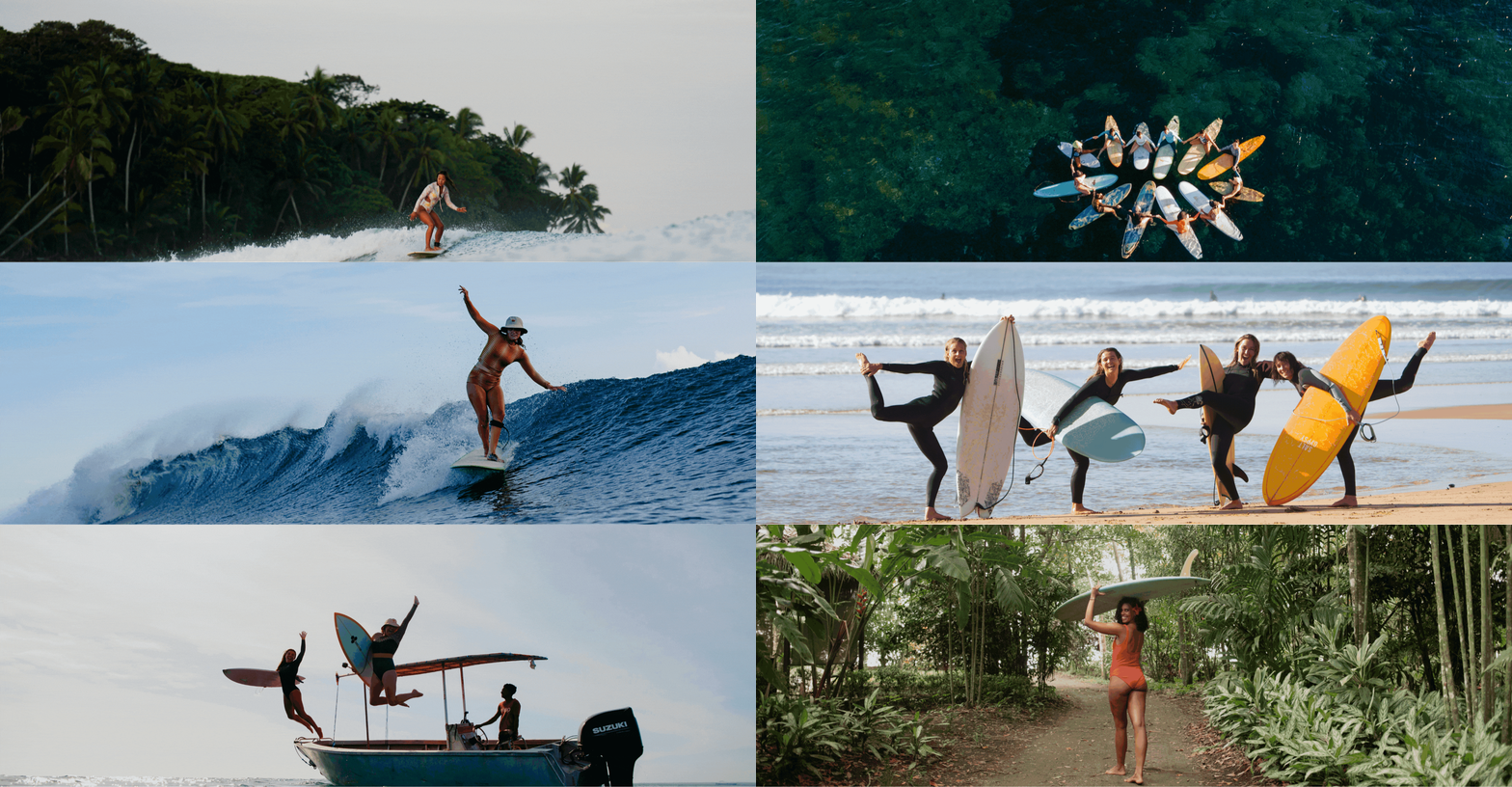
At Surf With Amigas, we believe the ocean and surfing is for everyone — no matter your age, background, or experience level. Our retreats bring together women of all ages to surf, connect, and grow in beautiful, often remote corners of the world.
And for those stepping into their “golden” chapter with confidence and curiosity, we’re thrilled to offer something extra special: our new Golden Amigas Retreats, designed exclusively for women 50 and over. In honor of our Golden Amigas, we have a few of their stories to share.
When Heidi first joined a Surf With Amigas retreat, she had only stood up on a surfboard a couple of times. Like many women learning to surf later in life, she felt both excited and a little intimidated.
But that first trip changed everything.
“Surf With Amigas has been an absolute gift in my life,” Heidi says. “Learning to surf later in life can be pretty intimidating, but every year I look forward to my trip with SWA. I gain confidence, face my fears, and feel stronger — both in and out of the water.”
For Heidi and so many others, Surf With Amigas isn’t just about catching waves — it’s about building confidence, community, and courage. The SWA coaches are more than instructors; they’re mentors, cheerleaders, and friends who guide you through every paddle-out, wipeout, and breakthrough moment.


“The SWA team takes such special care to make sure you feel supported,” Heidi says. “Their kindness, expertise, and devotion make every wave a celebration. There’s nothing better than the feeling of accomplishment — hearing the cheers, claps, and joyful screams from the beach as your fellow Amigas share in your success.”
That shared energy — the laughter, the storytelling, the encouragement — is what keeps many women coming back year after year. The friendships built in the lineup often become lifelong bonds that extend far beyond the ocean. Another Golden Amiga, Alla, shared a similar sentiment about learning to surf and her experience with SWA:
“Surf With Amigas gave me an incredible opportunity to surf in a safe, supportive, and beautiful environment. The women I’ve met on my retreats have become lifelong friends, and attending retreats is as much about the experience of women supporting women across all stages of life as it is about improving and growing as a surfer.”
And now, Surf With Amigas is creating an even more intentional space for women who are ready to embrace the next chapter with confidence: the Golden Amigas Retreat. We’ve noticed from the women that come on our retreats that stoke only grows stronger with age, and we want to create an environment where women can be empowered, progress in surfing, and feel supported, no matter the age or where they may be at in life.


These retreat experiences are designed to meet women where they’re at, in and out of the ocean. You’ll have the chance to deepen your relationship with the ocean, refine your surfing techniques (whether it’s your first time on a board or hundredth), and rediscover what it means to move with confidence and ease — in the lineup and in life.
For Golden Amiga Heidi, surfing has become a metaphor for aging boldly and joyfully:
“Every wave is a reminder that you’re capable of more than you think. It’s about letting go of fear, trusting yourself, and celebrating every small victory along the way.” I am so grateful to have met so many incredible women On my SWA trips and every year is a new opportunity to meet new friends to learn new things and have a new adventure.
Whether you’re brand new to surfing or returning to it with a renewed sense of purpose, Surf With Amigas invites you to join a circle of women who lift each other up — in the water, on the beach, and beyond. Our Amiga, Alla, describes this feeling that SWA embodies perfectly:
“Grateful for the sea that teaches us to let go and
for the waves that carry our fears away .
But most of all—
grateful for my surf sisters.
For the laughter, the courage and
the smiles after long sessions.
You remind me that joy is best when shared,
and that every wave is a gift.
Forever thankful for the opportunity to become a forever Amiga.”Another Golden Amiga, Kelly, shares her story of learning to surf later in life with Surf with Amigas:
Surfing has become one of the absolute true joys of my life—a source of challenge,
camaraderie, and endless rewards. I didn’t pick up a surfboard until I turned 40, but
from the first time I stood up on a board I knew I was hooked for life! I love that every
wave is unique, presenting its own challenge and demanding focus, patience, and
resilience. There’s a thrill and anticipation every time I paddle out, read the ocean, and
catch a wave; the ocean keeps me inspired and motivated to push my boundaries.
What makes surfing even more meaningful are the strong bonds of friendship I have
formed, especially among women. The unwavering support from my surf sisters keeps
me going especially in times where I may be struggling or feeling a little fearful on a big
day. Just the simple ability to paddle out with my girl posse is priceless. Even now, in
my 60s, my surfing continues to improve and I still savor every minute spent in the surf
with my friends. Age has only deepened my appreciation for the sport and the
sisterhood it fosters. Each session leaves me feeling invigorated, accomplished, and
grateful for the ongoing adventure.
Surfing isn’t just for the young — it’s for the bold, the curious, and the golden!


Ready to join the lineup?
Golden Amigas Retreats: February and April — for women 50+
Spots are limited and filling fast — learn more and reserve your space at surfwithamigas.com.


