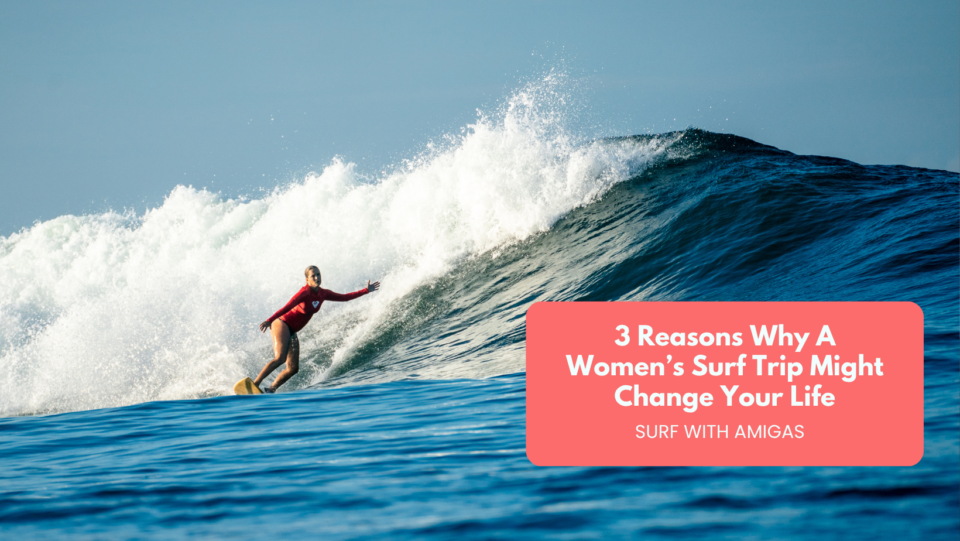
3 Reasons Why A Women’s Surf Trip Might Change Your Life

Not everyone signs up for a surf retreat expecting it to be a  life-changing experience. Many of us just want to get better in the water, catch more waves, and maybe enjoy a beautiful place with good company without having to plan too much out ourselves. But more often than not, something deeper happens.

As a former Amiga Allison describes,

“Although I’m not a person prone to drama, my Surf With Amigas retreats have been life changers—every single one.”

So what is it about a women’s surf trip with SWA that can create such a lasting impact? Here are three reasons why it might just change your life, too:

1. You Finally Break Through What’s Been Holding You Back

Progress in surfing can often feel painstakingly slow, especially when you’re learning on your own with inconsistent waves and don’t have a chance to get into the lineup as much as you’d like. It’s easy to plateau and lack froth to paddle out for another session.

At a SWA retreat, you’ll get snapped out of a surf slump in a flash, and begin to create new habits. With both in and out of water coaching, all the real time feedback makes it easy to think about implementing new changes in your surfing.

As one Amiga put it:

“Between the in-the-water coaching and the video coaching from the shore, I improved my surfing more than I had ever hoped.”

2. You experience the power of community

There’s something special about being surrounded by a small group of women who are all there for the same reason: to learn, grow, support one another, and of course surf our brains out! As former Amiga Allison explains,

“With only 12 women at a time and at least five or six coaches, we all got such individual attention.”

Direct support in all areas of the retreat space create a community to grow, have meaningful chats, and share all the highs and lows in between. The relationships that form at these retreats often last long after the trip ends.

3. You Grow (beyond surfing)

After a week of surfing epic waves and connecting with other women from all over the world, most Amigas find that they experience a significant shift, realignment, or some element of life change. As Amiga Allison explains,

“I have not only improved my surfing more than I had ever hoped as an older adult, but I also have enjoyed some amazing connections and life-changing perspectives.”

For those doubting, just take the leap! Take the trip! A surf and yoga retreat with SWA is bound to make a difference in your surfing, and potentially your life. These trips allow us to fully disconnect from our usual routines, reconnect with others in a new place, and wholeheartedly sink into surfing while exploring new places and cultures.

Check out our amazing team and retreat locations and book your next dream trip!

How To Read Wave Energy on a Surf Forecast

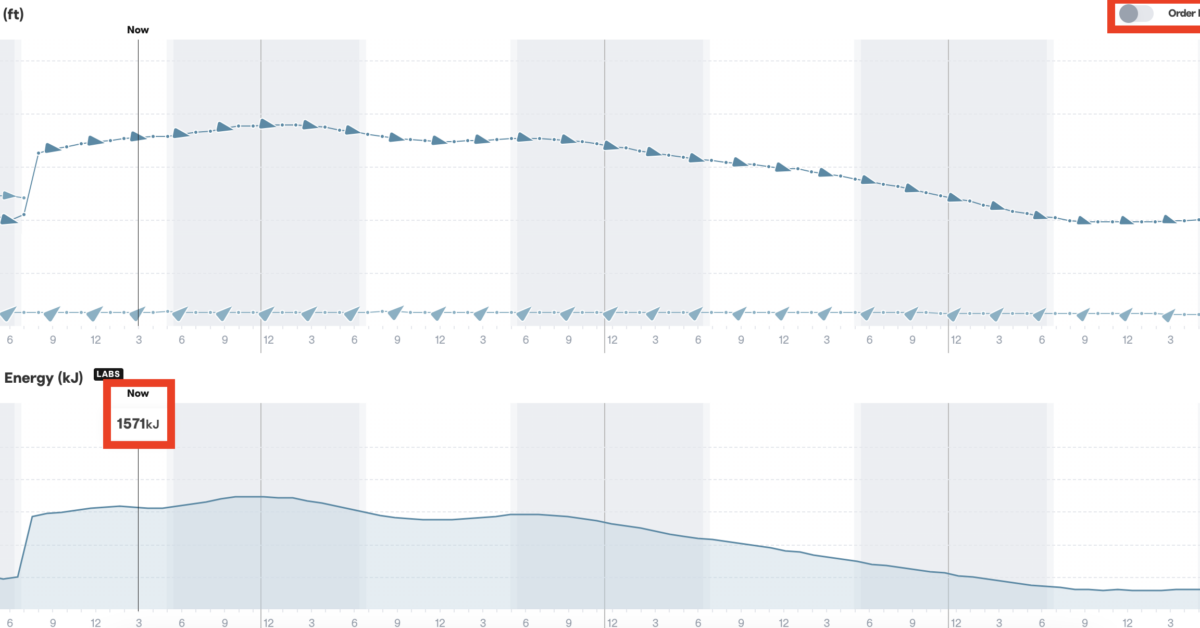
If you’ve ever stared at the wave energy numbers (the reading in kJ usually at the bottom of a Surfline forecast) wondering what they actually mean, this blog is for you. If you’d like to learn more about this topic, check out our recent Second Breakfast podcast episode with oceanographer Dr. Paige Hoel, better known as @liloceanpaige on TikTok and Instagram, where we dive into the science behind surf forecasting and more specifically, wave energy. At our women’s surf and yoga retreats, we also run daily classroom sessions where you can learn more about topics like wave energy and more! Check out our retreat schedule here to learn more.

What Is Wave Energy?

Wave energy is essentially a combination of swell height and swell period.

According to Paige, think of it like this:

“Height tells you how big the wave is.
Period tells you how powerful it is.”

When combined, they produce the wave energy value you see on surf forecasts.

The Simple Rule:

  • Lower energy number = more mellow conditions

  • Higher energy number = more powerful, faster-moving waves

Very generally speaking, the higher the energy, the harder the conditions and typically, the faster you’ll travel on the wave. But according to Paige,

The wave energy number should just be taken with a grain of salt, it shouldn’t be the make or break value for your surf.”

Understand Swell Period (This Is Huge)

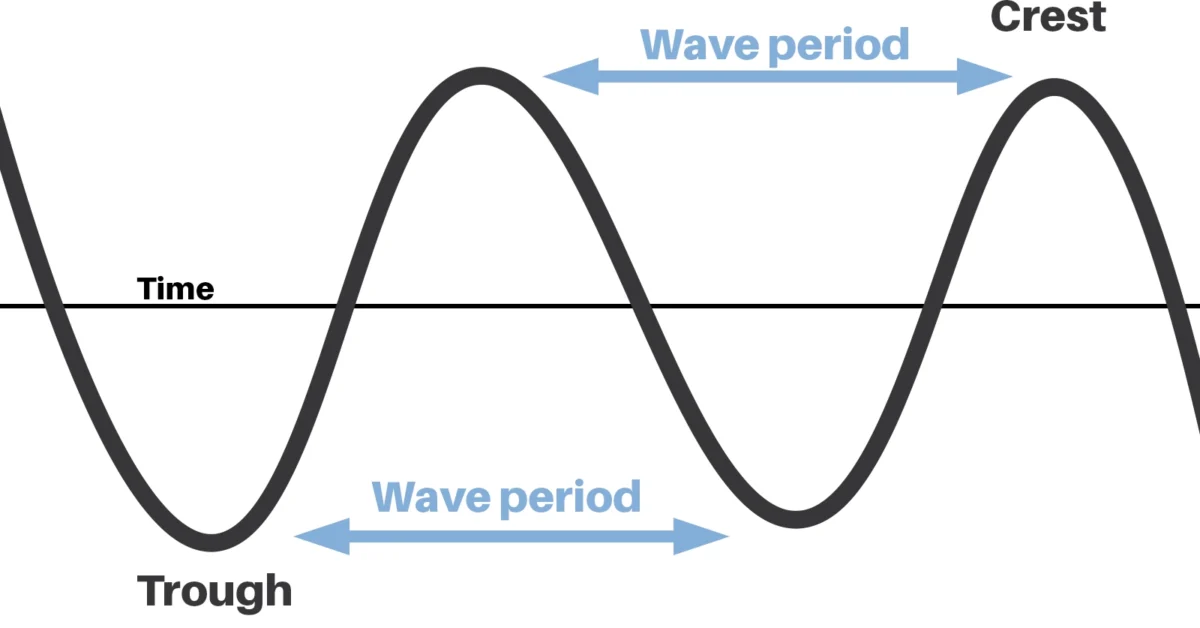
To understand the energy reading, it is essential we break down swell period. Swell period is measured in seconds, which represents the time between wave peaks. Depending on where you live in the world, these numbers may also signify different things. For example, generally on the West Coast of North America, the breakdown of period is this:

  • 6–9 seconds: windswell, weaker, waves breaking closer together

  • 10–13 seconds: medium-period, more organized

  • 14+ seconds: long-period groundswell, more powerful, waves spaced out

When there’s a longer period on a forecast, this means waves have traveled farther, and have more energy. This is why two identical height swells (but with a different period, and likely wave energy, can feel completely different in the water.)

What the “Energy” Number Actually Means

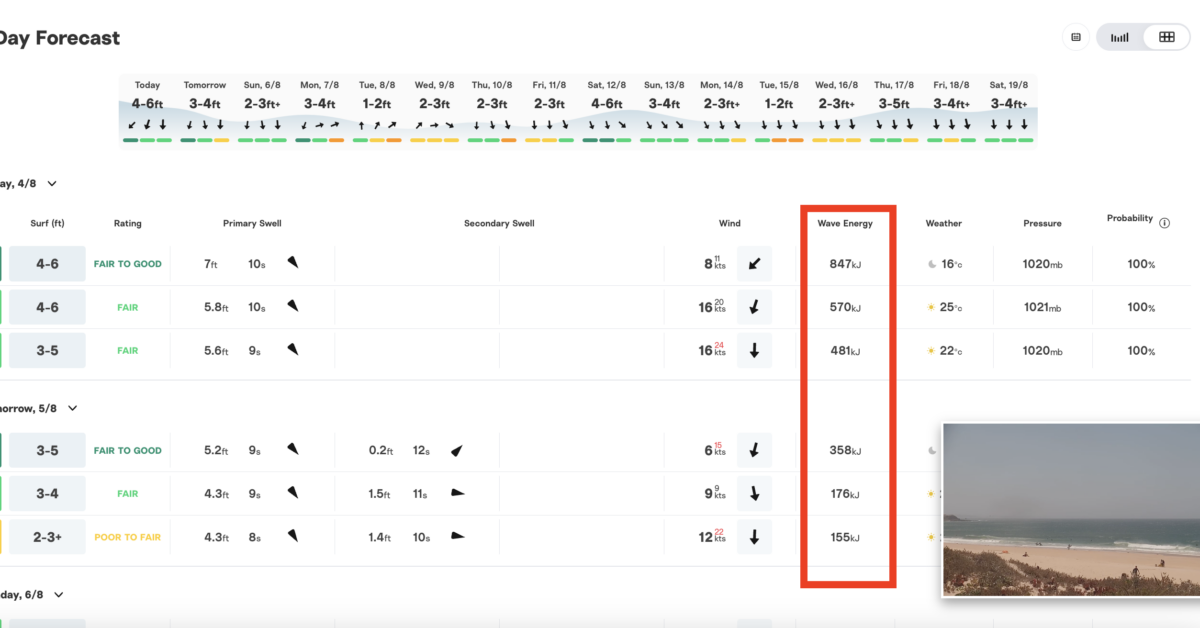
On sites like Surfline, you’ll see a wave energy number listed alongside swell height and period. Because the wave energy number is dependent on height and period, when there is a bigger height and longer period, the wave energy will likely increase.

Below you can see some examples of what you’ll see when you open up your forecast:

When you open up the forecast, try to follow these steps:

  • Ensure wind/tide conditions are working for your break.
  • Mainly focus on height + period first.
  • Then look at the energy number for confirmation.

According to Surfline, they include this extra wave energy number for the following reasons:

  • “2 days with identical surf height can have different energy depending on the underlying swells

  • Other factors (e.g. the depth of the water and gradient of the beach, the tide, and the sandbars/reef) will affect how powerful the surf feels

  • 300kJ could be really powerful at one beach but less so at another, due to how the waves approach that spot and the effect of differences in the ocean floor.”

Once you get more in tune with the types of conditions you enjoy, you can get more in the weeds with wind, tide, swell direction, and multi-swell interactions. At our retreats, we always emphasize that you shouldn’t feel pressure to decode everything at once! Surf forecasting is also a skill you’ll build over time with more exposure to the breaks you surf. Also, remember that forecasts are MODELS, and that while they are sophisticated, they’re not perfect.

Quick Recap

  • Energy = swell height + period working together
  • Lower number = mellow
  • Higher number = more power + speed
  • Forecasts aren’t perfect, so take everything with a grain of salt!
  • Combine data you see with your own intuition or experience at different breaks (try even keeping a surf journal to document the conditions you like!)

If you want to learn more about the science behind swell formation, wave energy, and ocean dynamics, check out our women’s surf retreats and listen to our full episode with Dr. Paige Hoel on Second Breakfast with SWA, available on Apple Podcasts and Spotify.

Level Up Your Surfing & Stoke with a Surf Coaching Trip to Sumatra Indonesia

surf with amigas advanced retreat indonesia

If you’re craving a surf trip that actually helps you improve with waves that challenge you and coaching that empowers you, then a SWA retreat in South Sumatra, Indonesia might just be next on your list!

Located on the southwest coast of Sumatra, this zone is world-renowned for its consistent, quality waves that range from hollow beach breaks to long, peeling reef points. Think long left point breaks that keep you challenged yet frothing, plus a whole cornucopia of other options.

We’ll be staying out front of a world-class beach break with hollow rights and lefts, but also just a short drive away from a mellow right-reef break. No matter what the conditions are, we will find waves! We also will be going in the shoulder season, which means the waves won’t be too gnarly yet still plenty challenging and fun, and likely with fewer people in the lineup.

But here’s the ultimate piece: you don’t have to be thrown into hectic lineups with intimidating bros to get the most out of this place. Instead, picture a lineup filled with the ultimate girl gang to cheer you on and high-quality surf coaching to boot. This isn’t your typical surf camp where you’re left to fend for yourself in a crowded lineup. Surf With Amigas offers this Indonesia retreat as a high-level coaching experience designed for intermediate to advanced surfers who want to deepen their skills in a supportive, focused environment.

What Makes This Different

Surf With Amigas offers a unique experience that meets you wherever you’re at. Here are just a few of the perks you may experience at the South Sumatra Indonesia Surf Retreat:

  • Daily individualized in-water coaching — you’re guided through sessions with real feedback tailored to you.

  • Post-session video coaching — seeing yourself surf on video is one of the fastest ways to improve!

  • Consistent, world-class waves — waves, waves and more waves! From beach breaks right out front to world-class lefts just around the corner.

  • Intimate group size – you’ll be able to froth out and connect with other rad humans, in and out of the surf. This retreat maxes out at 10 participants.

  • Extra perks – daily yoga and jungle explorations to complement surfing your brains and bodies out.

Beyond the Waves

This is still Indonesia, so after the surf sessions you get to sink into slow afternoons, fresh meals, sunsets, and genuine connection with other amazing Amigas who are up for adventure! There are other activities besides surfing, including an epic float down a river on inner tubes and swimming in a nearby waterfall to name a few. This trip is great for those who want a balance of challenge, stoke, and presence for the ultimate well-rounded surf trip.

To check for available spots and learn more about SWA retreats in South Sumatra, click here!

Learn to Surf Over 50: What It’s Like To Go On Your First Surf Retreat

surf with amigas golden amigas retreat

NEver too Late to Surf: Stories From Our Golden amigas

At Surf With Amigas, we believe the ocean and surfing is for everyone — no matter your age, background, or experience level. Our retreats bring together women of all ages to surf, connect, and grow in beautiful, often remote corners of the world.

And for those stepping into their “golden” chapter with confidence and curiosity, we’re thrilled to offer something extra special: our new Golden Amigas Retreats, designed exclusively for women 50 and over. In honor of our Golden Amigas, we have a few of their stories to share.

When Heidi first joined a Surf With Amigas retreat, she had only stood up on a surfboard a couple of times. Like many women learning to surf later in life, she felt both excited and a little intimidated.

But that first trip changed everything.

“Surf With Amigas has been an absolute gift in my life,” Heidi says. “Learning to surf later in life can be pretty intimidating, but every year I look forward to my trip with SWA. I gain confidence, face my fears, and feel stronger — both in and out of the water.”

For Heidi and so many others, Surf With Amigas isn’t just about catching waves — it’s about building confidence, community, and courage. The SWA coaches are more than instructors; they’re mentors, cheerleaders, and friends who guide you through every paddle-out, wipeout, and breakthrough moment.

“The SWA team takes such special care to make sure you feel supported,” Heidi says. “Their kindness, expertise, and devotion make every wave a celebration. There’s nothing better than the feeling of accomplishment — hearing the cheers, claps, and joyful screams from the beach as your fellow Amigas share in your success.”

That shared energy — the laughter, the storytelling, the encouragement — is what keeps many women coming back year after year. The friendships built in the lineup often become lifelong bonds that extend far beyond the ocean. Another Golden Amiga, Alla, shared a similar sentiment about learning to surf and her experience with SWA:

“Surf With Amigas gave me an incredible opportunity to surf in a safe, supportive, and beautiful environment. The women I’ve met on my retreats have become lifelong friends, and attending retreats is as much about the experience of women supporting women across all stages of life as it is about improving and growing as a surfer.”

And now, Surf With Amigas is creating an even more intentional space for women who are ready to embrace the next chapter with confidence: the Golden Amigas Retreat. We’ve noticed from the women that come on our retreats that stoke only grows stronger with age, and we want to create an environment where women can be empowered, progress in surfing, and feel supported, no matter the age or where they may be at in life.

These retreat experiences are designed to meet women where they’re at, in and out of the ocean. You’ll have the chance to deepen your relationship with the ocean, refine your surfing techniques (whether it’s your first time on a board or hundredth), and rediscover what it means to move with confidence and ease — in the lineup and in life.

For Golden Amiga Heidi, surfing has become a metaphor for aging boldly and joyfully:

“Every wave is a reminder that you’re capable of more than you think. It’s about letting go of fear, trusting yourself, and celebrating every small victory along the way.” I am so grateful to have met so many incredible women On my SWA trips and every year is a new opportunity to meet new friends to learn new things and have a new adventure.

Whether you’re brand new to surfing or returning to it with a renewed sense of purpose, Surf With Amigas invites you to join a circle of women who lift each other up — in the water, on the beach, and beyond. Our Amiga, Alla, describes this feeling that SWA embodies perfectly:

“Grateful for the sea that teaches us to let go and
for the waves that carry our fears away .
But most of all—
grateful for my surf sisters.
For the laughter, the courage and
the smiles after long sessions.
You remind me that joy is best when shared,
and that every wave is a gift.
Forever thankful for the opportunity to become a forever Amiga.”

Another Golden Amiga, Kelly, shares her story of learning to surf later in life with Surf with Amigas:

Surfing has become one of the absolute true joys of my life—a source of challenge,
camaraderie, and endless rewards. I didn’t pick up a surfboard until I turned 40, but
from the first time I stood up on a board I knew I was hooked for life! I love that every
wave is unique, presenting its own challenge and demanding focus, patience, and
resilience. There’s a thrill and anticipation every time I paddle out, read the ocean, and
catch a wave; the ocean keeps me inspired and motivated to push my boundaries.
What makes surfing even more meaningful are the strong bonds of friendship I have
formed, especially among women. The unwavering support from my surf sisters keeps
me going especially in times where I may be struggling or feeling a little fearful on a big
day. Just the simple ability to paddle out with my girl posse is priceless. Even now, in
my 60s, my surfing continues to improve and I still savor every minute spent in the surf
with my friends. Age has only deepened my appreciation for the sport and the
sisterhood it fosters. Each session leaves me feeling invigorated, accomplished, and
grateful for the ongoing adventure.

Surfing isn’t just for the young — it’s for the bold, the curious, and the golden!


Ready to join the lineup?
Golden Amigas Retreats: February and April — for women 50+

Spots are limited and filling fast — learn more and reserve your space at surfwithamigas.com.
Improve Your Frontside Cutback: What to Look For and How to Turn

The frontside cutback is a very important maneuver in surfing, whether you’re riding a longboard or a shortboard. It’s not just about style—it’s a way to stay in the most powerful part of the wave, link your turns, and keep your ride flowing. We just released a new video surf tutorial all about “How To Do a Frontside Cutback on a Shortboard”. In this video Holly breaks down exactly why we do cutbacks, when to do them, and how to make them look smooth and controlled. Here’s the step-by-step approach, plus some troubleshooting tips pulled straight from her breakdown.

Why Do a Cutback?

The cutback helps you reconnect with the power source of the wave when you’ve raced too far ahead, or the wave is slowing down or losing power in front of you. If you’re out on the shoulder where the wave is softer, a cutback lets you redirect back toward the pocket. In this video tutorial, Holly emphasizes that the best time to cut back is when you notice the wave losing steepness. That’s your signal to look back toward the pocket and reset your line.

Step 1: Spot the Section

As you trim down the line, pay attention to the top third of the wave. That’s where the energy lives. Holly explains in the video that if the shoulder looks slopy and you’re starting to lose speed, it’s the perfect cue to set up a cutback. If the wave is jacking up or looks curvy, avoid doing a cutback in this section.

Step 2: Initiate the Turn

Your eyes lead the way—look first, then shift your weight slightly onto your heels and point your hips where you want to go as you start to angle back towards the whitewater.

Step 3: Compression and Rotation

Bend your knees to stay compressed, then rotate and open up your shoulders and hips back towards the pocket of the wave. Think of drawing a smooth arc. Push your weight through both feet to begin to redirect towards the power source. When initiating the cutback, it’s important not to get too low on the wave, because you’ll lose your speed. Try to stay in the top third of the wave.

Step 4: Redirect Back to the Pocket and Flow Down the Line

As you finish the turn and see and/or reach the whitewash, lean back onto your toe side and your back foot to help pivot the board back around. This lets you release the turn smoothly and aim back toward the breaking part of the wave. Don’t forget to shift the weight back onto the front foot again after completing the turn to help you accelerate back down the line!

Common Mistakes to Avoid

  • Looking down at your board instead of the wave. Keep your eyes on the top third where you want to go.

  • Trying to cut back on a steep, fast section. Save it for the slopy, slower parts.

  • Forgetting to compress. Staying tall makes it harder to control your turn.

The frontside cutback is all about timing and flow. Use it when the wave starts to get softer, stay in the top third of the wave, and lead the turn with your hips. For a full visual breakdown, including what not to do and how to troubleshoot common problems, check out Holly’s “How To Do a Frontside Cutback on a Shortboard” video tutorial. With practice, the frontside cutback will become second nature and can transform your surfing!