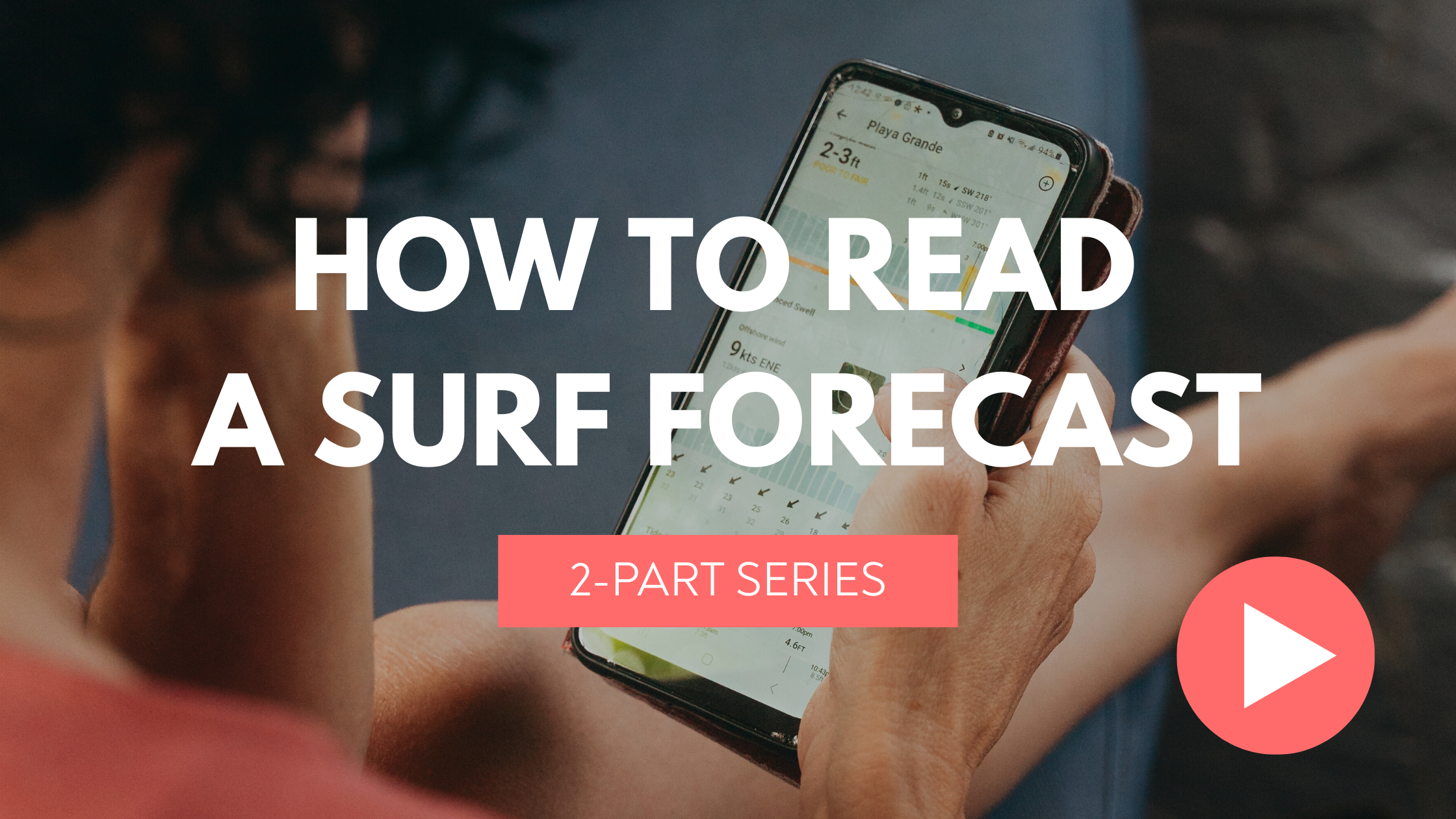

You’re ready to surf, open up a forecast, and… boom. You’re hit with a flood of numbers and arrows. Swell height, period, wind speed, direction, tides — it’s a lot. Unless you’re on a surf coaching retreat where your coaches will help explain it all, it can be really confusing. We get it!
But here’s the secret: you don’t need to overthink it.
To get a solid idea of what the waves will actually feel like, the most important numbers to look at are:
- Wave Height
- Swell Period
Let’s dig into why these matter most — and how to read them like a pro.
Wave Height: The Basic Snapshot
This is the one most people look at first — how big the waves are expected to be. But here’s the catch: forecasted wave height is just an estimate based on computer models. It gives a general idea, but not the full story.
Pro Tip: Use wave height to track overall trends — is it going up or down this week? But don’t rely on it alone to gauge surf conditions.

Swell Period: The Real Power Player
This is where things get juicy.
Swell period measures the time (in seconds) between waves in a set. It tells you how much energy is packed into each wave.
Different swell periods will look very different at different breaks and also may mean bigger/smaller waves for surfers in different parts of the globe. Take these ranges with a grain of salt!
-
Short period (5–8 sec): Smaller, slower, wind-driven waves.
-
Medium period (9–12 sec): Can often mean fun, more organized waves — often the sweet spot for many beach breaks.
-
Long period (13+ sec): Bigger, faster, and more powerful surf. Even a “3 ft” day can feel double that with a long period.
Longer period = stronger swell = bigger, more powerful waves.
It’s the difference between fun and manageable vs. surprise closeouts or sneaky power you weren’t expecting.

Other Factors
Once you’ve locked in the wave height + period, then look at:
-
Swell Direction: Is it aimed at your break? Some beaches only light up with a specific angle.
-
Wind: Offshore = clean & glassy. Onshore = choppy & chaotic.
-
Tides: Every break reacts differently. Start to notice how your home break behaves at high vs. low tide.
Don’t Just Trust the Forecast — Watch the Ocean
Like anything in surfing, reading a forecast takes practice. The best way to learn?
- Check the forecast
- Go surfing
- Take notes on what conditions you experienced during your session
- Repeat!
Over time, you’ll connect the dots between the numbers and the real-life waves under your board.
Because at the end of the day, it’s not just about what the forecast says — it’s about how you enjoyed your surf experience that day!
Looking for more surf wisdom? Join an upcoming Surf With Amigas Surf Coaching Retreat or check out this video to learn more about reading surf forecasts!