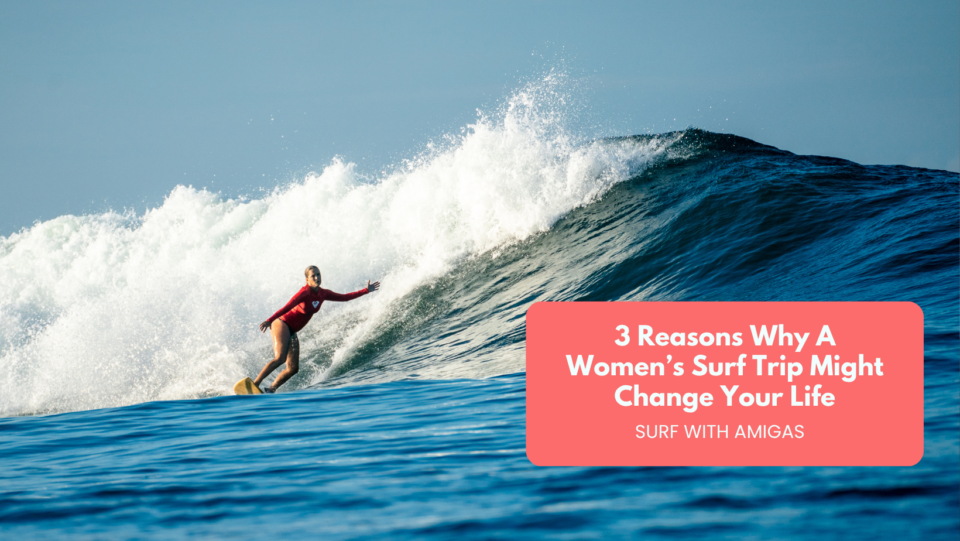

3 Reasons Why A Women’s Surf Trip Might Change Your Life

Not everyone signs up for a surf retreat expecting it to be a  life-changing experience. Many of us just want to get better in the water, catch more waves, and maybe enjoy a beautiful place with good company without having to plan too much out ourselves. But more often than not, something deeper happens.

As a former Amiga Allison describes,

“Although I’m not a person prone to drama, my Surf With Amigas retreats have been life changers—every single one.”

So what is it about a women’s surf trip with SWA that can create such a lasting impact? Here are three reasons why it might just change your life, too:

1. You Finally Break Through What’s Been Holding You Back

Progress in surfing can often feel painstakingly slow, especially when you’re learning on your own with inconsistent waves and don’t have a chance to get into the lineup as much as you’d like. It’s easy to plateau and lack froth to paddle out for another session.

At a SWA retreat, you’ll get snapped out of a surf slump in a flash, and begin to create new habits. With both in and out of water coaching, all the real time feedback makes it easy to think about implementing new changes in your surfing.

As one Amiga put it:

“Between the in-the-water coaching and the video coaching from the shore, I improved my surfing more than I had ever hoped.”

2. You experience the power of community

There’s something special about being surrounded by a small group of women who are all there for the same reason: to learn, grow, support one another, and of course surf our brains out! As former Amiga Allison explains,

“With only 12 women at a time and at least five or six coaches, we all got such individual attention.”

Direct support in all areas of the retreat space create a community to grow, have meaningful chats, and share all the highs and lows in between. The relationships that form at these retreats often last long after the trip ends.

3. You Grow (beyond surfing)

After a week of surfing epic waves and connecting with other women from all over the world, most Amigas find that they experience a significant shift, realignment, or some element of life change. As Amiga Allison explains,

“I have not only improved my surfing more than I had ever hoped as an older adult, but I also have enjoyed some amazing connections and life-changing perspectives.”

For those doubting, just take the leap! Take the trip! A surf and yoga retreat with SWA is bound to make a difference in your surfing, and potentially your life. These trips allow us to fully disconnect from our usual routines, reconnect with others in a new place, and wholeheartedly sink into surfing while exploring new places and cultures.

Check out our amazing team and retreat locations and book your next dream trip!

How To Read Wave Energy on a Surf Forecast

If you’ve ever stared at the wave energy numbers (the reading in kJ usually at the bottom of a Surfline forecast) wondering what they actually mean, this blog is for you. If you’d like to learn more about this topic, check out our recent Second Breakfast podcast episode with oceanographer Dr. Paige Hoel, better known as @liloceanpaige on TikTok and Instagram, where we dive into the science behind surf forecasting and more specifically, wave energy. At our women’s surf and yoga retreats, we also run daily classroom sessions where you can learn more about topics like wave energy and more! Check out our retreat schedule here to learn more.

What Is Wave Energy?

Wave energy is essentially a combination of swell height and swell period.

According to Paige, think of it like this:

“Height tells you how big the wave is.
Period tells you how powerful it is.”

When combined, they produce the wave energy value you see on surf forecasts.

The Simple Rule:

  • Lower energy number = more mellow conditions

  • Higher energy number = more powerful, faster-moving waves

Very generally speaking, the higher the energy, the harder the conditions and typically, the faster you’ll travel on the wave. But according to Paige,

The wave energy number should just be taken with a grain of salt, it shouldn’t be the make or break value for your surf.”

Understand Swell Period (This Is Huge)

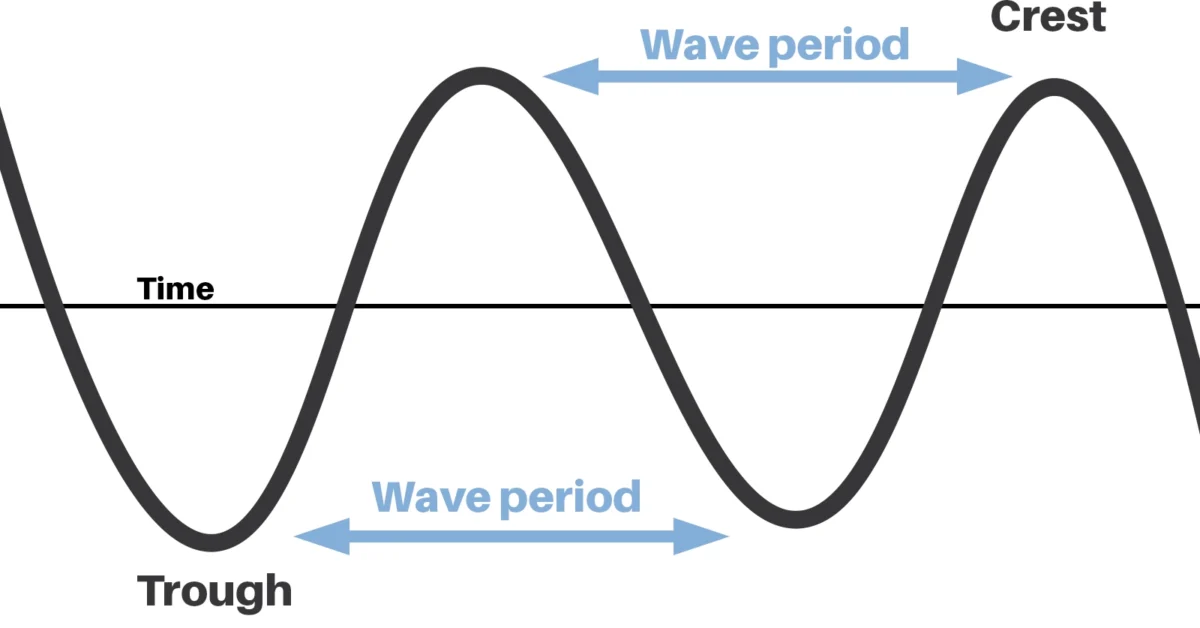
To understand the energy reading, it is essential we break down swell period. Swell period is measured in seconds, which represents the time between wave peaks. Depending on where you live in the world, these numbers may also signify different things. For example, generally on the West Coast of North America, the breakdown of period is this:

  • 6–9 seconds: windswell, weaker, waves breaking closer together

  • 10–13 seconds: medium-period, more organized

  • 14+ seconds: long-period groundswell, more powerful, waves spaced out

When there’s a longer period on a forecast, this means waves have traveled farther, and have more energy. This is why two identical height swells (but with a different period, and likely wave energy, can feel completely different in the water.)

What the “Energy” Number Actually Means

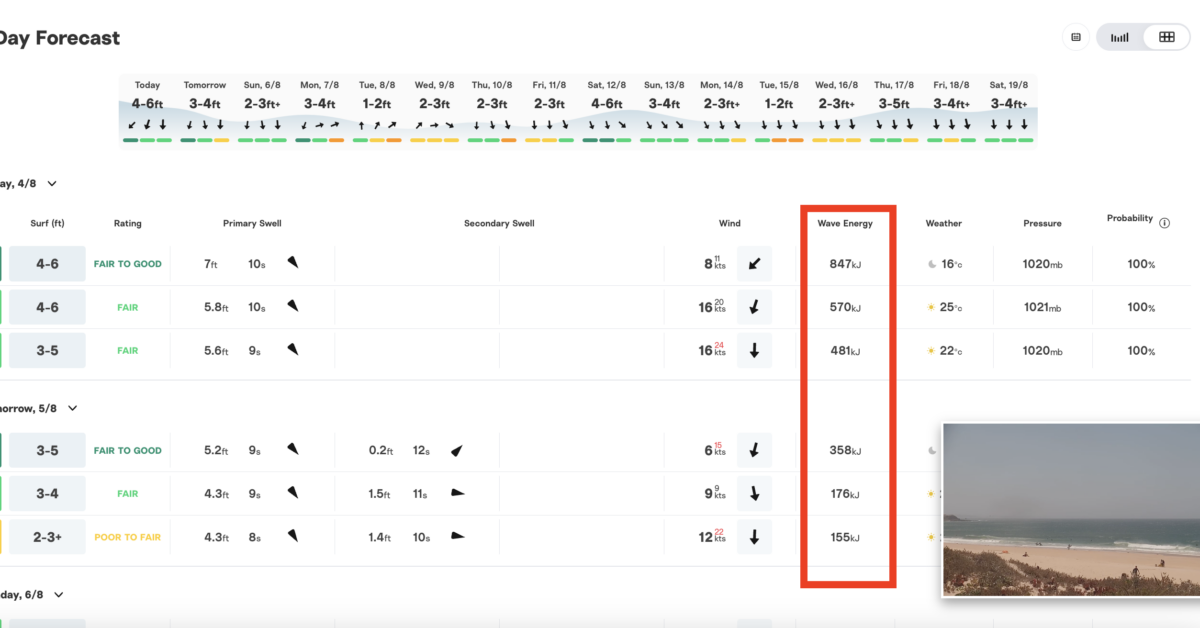
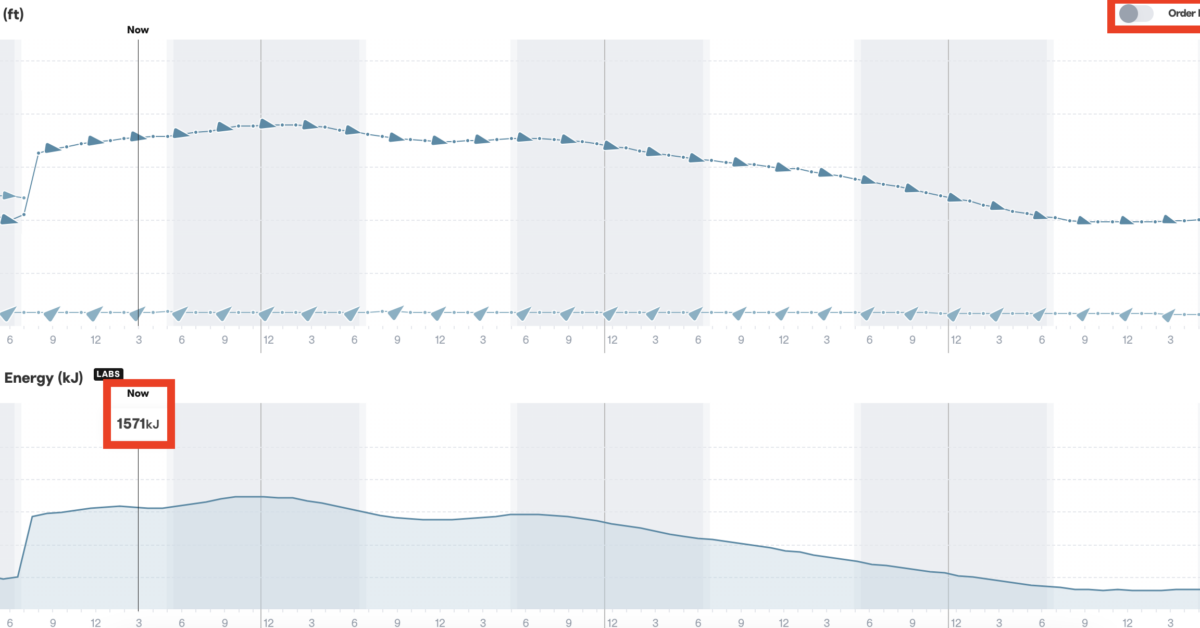
On sites like Surfline, you’ll see a wave energy number listed alongside swell height and period. Because the wave energy number is dependent on height and period, when there is a bigger height and longer period, the wave energy will likely increase.

Below you can see some examples of what you’ll see when you open up your forecast:

When you open up the forecast, try to follow these steps:

  • Ensure wind/tide conditions are working for your break.
  • Mainly focus on height + period first.
  • Then look at the energy number for confirmation.

According to Surfline, they include this extra wave energy number for the following reasons:

  • “2 days with identical surf height can have different energy depending on the underlying swells

  • Other factors (e.g. the depth of the water and gradient of the beach, the tide, and the sandbars/reef) will affect how powerful the surf feels

  • 300kJ could be really powerful at one beach but less so at another, due to how the waves approach that spot and the effect of differences in the ocean floor.”

Once you get more in tune with the types of conditions you enjoy, you can get more in the weeds with wind, tide, swell direction, and multi-swell interactions. At our retreats, we always emphasize that you shouldn’t feel pressure to decode everything at once! Surf forecasting is also a skill you’ll build over time with more exposure to the breaks you surf. Also, remember that forecasts are MODELS, and that while they are sophisticated, they’re not perfect.

Quick Recap

  • Energy = swell height + period working together
  • Lower number = mellow
  • Higher number = more power + speed
  • Forecasts aren’t perfect, so take everything with a grain of salt!
  • Combine data you see with your own intuition or experience at different breaks (try even keeping a surf journal to document the conditions you like!)

If you want to learn more about the science behind swell formation, wave energy, and ocean dynamics, check out our women’s surf retreats and listen to our full episode with Dr. Paige Hoel on Second Breakfast with SWA, available on Apple Podcasts and Spotify.

Level Up Your Surfing & Stoke with a Surf Coaching Trip to Sumatra Indonesia

surf with amigas advanced retreat indonesia

If you’re craving a surf trip that actually helps you improve with waves that challenge you and coaching that empowers you, then a SWA retreat in South Sumatra, Indonesia might just be next on your list!

Located on the southwest coast of Sumatra, this zone is world-renowned for its consistent, quality waves that range from hollow beach breaks to long, peeling reef points. Think long left point breaks that keep you challenged yet frothing, plus a whole cornucopia of other options.

We’ll be staying out front of a world-class beach break with hollow rights and lefts, but also just a short drive away from a mellow right-reef break. No matter what the conditions are, we will find waves! We also will be going in the shoulder season, which means the waves won’t be too gnarly yet still plenty challenging and fun, and likely with fewer people in the lineup.

But here’s the ultimate piece: you don’t have to be thrown into hectic lineups with intimidating bros to get the most out of this place. Instead, picture a lineup filled with the ultimate girl gang to cheer you on and high-quality surf coaching to boot. This isn’t your typical surf camp where you’re left to fend for yourself in a crowded lineup. Surf With Amigas offers this Indonesia retreat as a high-level coaching experience designed for intermediate to advanced surfers who want to deepen their skills in a supportive, focused environment.

What Makes This Different

Surf With Amigas offers a unique experience that meets you wherever you’re at. Here are just a few of the perks you may experience at the South Sumatra Indonesia Surf Retreat:

  • Daily individualized in-water coaching — you’re guided through sessions with real feedback tailored to you.

  • Post-session video coaching — seeing yourself surf on video is one of the fastest ways to improve!

  • Consistent, world-class waves — waves, waves and more waves! From beach breaks right out front to world-class lefts just around the corner.

  • Intimate group size – you’ll be able to froth out and connect with other rad humans, in and out of the surf. This retreat maxes out at 10 participants.

  • Extra perks – daily yoga and jungle explorations to complement surfing your brains and bodies out.

Beyond the Waves

This is still Indonesia, so after the surf sessions you get to sink into slow afternoons, fresh meals, sunsets, and genuine connection with other amazing Amigas who are up for adventure! There are other activities besides surfing, including an epic float down a river on inner tubes and swimming in a nearby waterfall to name a few. This trip is great for those who want a balance of challenge, stoke, and presence for the ultimate well-rounded surf trip.

To check for available spots and learn more about SWA retreats in South Sumatra, click here!

Learn to Surf Over 50: What It’s Like To Go On Your First Surf Retreat

surf with amigas golden amigas retreat

NEver too Late to Surf: Stories From Our Golden amigas

At Surf With Amigas, we believe the ocean and surfing is for everyone — no matter your age, background, or experience level. Our retreats bring together women of all ages to surf, connect, and grow in beautiful, often remote corners of the world.

And for those stepping into their “golden” chapter with confidence and curiosity, we’re thrilled to offer something extra special: our new Golden Amigas Retreats, designed exclusively for women 50 and over. In honor of our Golden Amigas, we have a few of their stories to share.

When Heidi first joined a Surf With Amigas retreat, she had only stood up on a surfboard a couple of times. Like many women learning to surf later in life, she felt both excited and a little intimidated.

But that first trip changed everything.

“Surf With Amigas has been an absolute gift in my life,” Heidi says. “Learning to surf later in life can be pretty intimidating, but every year I look forward to my trip with SWA. I gain confidence, face my fears, and feel stronger — both in and out of the water.”

For Heidi and so many others, Surf With Amigas isn’t just about catching waves — it’s about building confidence, community, and courage. The SWA coaches are more than instructors; they’re mentors, cheerleaders, and friends who guide you through every paddle-out, wipeout, and breakthrough moment.

“The SWA team takes such special care to make sure you feel supported,” Heidi says. “Their kindness, expertise, and devotion make every wave a celebration. There’s nothing better than the feeling of accomplishment — hearing the cheers, claps, and joyful screams from the beach as your fellow Amigas share in your success.”

That shared energy — the laughter, the storytelling, the encouragement — is what keeps many women coming back year after year. The friendships built in the lineup often become lifelong bonds that extend far beyond the ocean. Another Golden Amiga, Alla, shared a similar sentiment about learning to surf and her experience with SWA:

“Surf With Amigas gave me an incredible opportunity to surf in a safe, supportive, and beautiful environment. The women I’ve met on my retreats have become lifelong friends, and attending retreats is as much about the experience of women supporting women across all stages of life as it is about improving and growing as a surfer.”

And now, Surf With Amigas is creating an even more intentional space for women who are ready to embrace the next chapter with confidence: the Golden Amigas Retreat. We’ve noticed from the women that come on our retreats that stoke only grows stronger with age, and we want to create an environment where women can be empowered, progress in surfing, and feel supported, no matter the age or where they may be at in life.

These retreat experiences are designed to meet women where they’re at, in and out of the ocean. You’ll have the chance to deepen your relationship with the ocean, refine your surfing techniques (whether it’s your first time on a board or hundredth), and rediscover what it means to move with confidence and ease — in the lineup and in life.

For Golden Amiga Heidi, surfing has become a metaphor for aging boldly and joyfully:

“Every wave is a reminder that you’re capable of more than you think. It’s about letting go of fear, trusting yourself, and celebrating every small victory along the way.” I am so grateful to have met so many incredible women On my SWA trips and every year is a new opportunity to meet new friends to learn new things and have a new adventure.

Whether you’re brand new to surfing or returning to it with a renewed sense of purpose, Surf With Amigas invites you to join a circle of women who lift each other up — in the water, on the beach, and beyond. Our Amiga, Alla, describes this feeling that SWA embodies perfectly:

“Grateful for the sea that teaches us to let go and
for the waves that carry our fears away .
But most of all—
grateful for my surf sisters.
For the laughter, the courage and
the smiles after long sessions.
You remind me that joy is best when shared,
and that every wave is a gift.
Forever thankful for the opportunity to become a forever Amiga.”

Another Golden Amiga, Kelly, shares her story of learning to surf later in life with Surf with Amigas:

Surfing has become one of the absolute true joys of my life—a source of challenge,
camaraderie, and endless rewards. I didn’t pick up a surfboard until I turned 40, but
from the first time I stood up on a board I knew I was hooked for life! I love that every
wave is unique, presenting its own challenge and demanding focus, patience, and
resilience. There’s a thrill and anticipation every time I paddle out, read the ocean, and
catch a wave; the ocean keeps me inspired and motivated to push my boundaries.
What makes surfing even more meaningful are the strong bonds of friendship I have
formed, especially among women. The unwavering support from my surf sisters keeps
me going especially in times where I may be struggling or feeling a little fearful on a big
day. Just the simple ability to paddle out with my girl posse is priceless. Even now, in
my 60s, my surfing continues to improve and I still savor every minute spent in the surf
with my friends. Age has only deepened my appreciation for the sport and the
sisterhood it fosters. Each session leaves me feeling invigorated, accomplished, and
grateful for the ongoing adventure.

Surfing isn’t just for the young — it’s for the bold, the curious, and the golden!


Ready to join the lineup?
Golden Amigas Retreats: February and April — for women 50+

Spots are limited and filling fast — learn more and reserve your space at surfwithamigas.com.

Improve Your Frontside Cutback: What to Look For and How to Turn

The frontside cutback is a very important maneuver in surfing, whether you’re riding a longboard or a shortboard. It’s not just about style—it’s a way to stay in the most powerful part of the wave, link your turns, and keep your ride flowing. We just released a new video surf tutorial all about “How To Do a Frontside Cutback on a Shortboard”. In this video Holly breaks down exactly why we do cutbacks, when to do them, and how to make them look smooth and controlled. Here’s the step-by-step approach, plus some troubleshooting tips pulled straight from her breakdown.

Why Do a Cutback?

The cutback helps you reconnect with the power source of the wave when you’ve raced too far ahead, or the wave is slowing down or losing power in front of you. If you’re out on the shoulder where the wave is softer, a cutback lets you redirect back toward the pocket. In this video tutorial, Holly emphasizes that the best time to cut back is when you notice the wave losing steepness. That’s your signal to look back toward the pocket and reset your line.

Step 1: Spot the Section

As you trim down the line, pay attention to the top third of the wave. That’s where the energy lives. Holly explains in the video that if the shoulder looks slopy and you’re starting to lose speed, it’s the perfect cue to set up a cutback. If the wave is jacking up or looks curvy, avoid doing a cutback in this section.

Step 2: Initiate the Turn

Your eyes lead the way—look first, then shift your weight slightly onto your heels and point your hips where you want to go as you start to angle back towards the whitewater.

Step 3: Compression and Rotation

Bend your knees to stay compressed, then rotate and open up your shoulders and hips back towards the pocket of the wave. Think of drawing a smooth arc. Push your weight through both feet to begin to redirect towards the power source. When initiating the cutback, it’s important not to get too low on the wave, because you’ll lose your speed. Try to stay in the top third of the wave.

Step 4: Redirect Back to the Pocket and Flow Down the Line

As you finish the turn and see and/or reach the whitewash, lean back onto your toe side and your back foot to help pivot the board back around. This lets you release the turn smoothly and aim back toward the breaking part of the wave. Don’t forget to shift the weight back onto the front foot again after completing the turn to help you accelerate back down the line!

Common Mistakes to Avoid

  • Looking down at your board instead of the wave. Keep your eyes on the top third where you want to go.

  • Trying to cut back on a steep, fast section. Save it for the slopy, slower parts.

  • Forgetting to compress. Staying tall makes it harder to control your turn.

The frontside cutback is all about timing and flow. Use it when the wave starts to get softer, stay in the top third of the wave, and lead the turn with your hips. For a full visual breakdown, including what not to do and how to troubleshoot common problems, check out Holly’s “How To Do a Frontside Cutback on a Shortboard” video tutorial. With practice, the frontside cutback will become second nature and can transform your surfing!

Why You Should Learn to Surf at a Women’s Surf Retreat in Northern Costa Rica

surf with amigas beginner surf retreat northern costa rica

Imagine waking up to the sound of howler monkeys and the crash of warm Pacific waves, your surfboard waiting for you just steps from your room. If you’ve ever dreamed of learning to surf—or simply want to deepen your connection with the ocean—there’s no better place to do it than at a women’s surf retreat in Northern Costa Rica. Here’s why:


1. Easy to Get To, Hard to Leave

One of the biggest perks of the Northern Costa Rica Palm Beach Retreat is how simple it is to get there. Just a short drive from the Liberia International Airport, you’ll skip the long travel days and arrive at your beachside hotel ready to unwind and dive in. For many Amigas, this makes the experience more accessible, stress-free, and appealing—especially if it’s your first time traveling solo or abroad.


2. The Most Beginner-Friendly Wave We Offer

The Northern Costa Rica Palm Beach Retreat location is Surf With Amigas’ most ideal retreat for brand-new surfers. The mellow, sandy-bottom beach break is perfect for learning how to catch your first wave and ride it all the way to shore—no reef, no crowds, and no intimidation. The waves here are gentle and consistent, which means more waves caught, more progress made, and way more fun. However, this retreat is still also great for more advanced surfers who want to improve their skills! There are plenty of waves just a quick walk up the same stretch of beach that can cater to higher levels.


3. You’ll Learn in a Safe, Supportive, All-Female Environment

Let’s be honest—surf culture can feel a little overwhelming. But at Surf With Amigas, you’re surrounded by encouragement, laughter, and zero judgment. Whether you’re paddling out for the first time or refining your pop-up, you’ll be guided by experienced female coaches and cheered on by a crew of adventurous, like-minded women.


4. You’ll Get Pro Coaching + Video Feedback

One of the most empowering tools you’ll experience is video analysis. Seeing yourself surf—even if you’re just getting started—helps you improve faster and build confidence. Plus, you’ll leave with incredible photos and videos that capture your progress and stoke. Not to mention, keep up your learning pre or post retreat with our SWA Online platform, where you can find more surf tutorials and tips!


5. Relax in Comfort Close to the Waves

The Northern Costa Rica Palm Beach Retreat is hosted at a cozy, locally-owned hotel just steps from the surf. Think laid-back jungle vibes, delicious meals, hammocks under the trees, and a private trail straight down to the sand. It’s simple, comfortable with all the modern amenities, and the space is built  on what matters: connecting with nature, yourself, and your new surf crew. Not to mention, the hotel’s bistro cafe is open to the public, so you’re bound to meet other travelers and locals!


6. Deep Roots in Local Community + Sustainability

Surf With Amigas isn’t just dropping in for a vacation—they’ve been working with local instructors and communities in Costa Rica for over a decade. The retreat supports local businesses, fosters cross-cultural friendships, and encourages sustainable travel choices. You’re not just a tourist—you’re a temporary local, with a meaningful role in a greater community.


7. It’s a Confidence Boost That Lasts a Lifetime

There’s nothing like the feeling of catching your first wave. Learning to surf in adulthood challenges you in all the right ways—it builds trust in your body, helps you push through fear, and leaves you feeling strong, exhilarated, and proud. Whether you arrive solo or with friends, you’ll leave with a deeper sense of self and a whole crew of Amigas cheering you on.

Learn more and book your retreat here!

How to Noseride: Push the Bush and Tuck the Tush

There’s nothing quite like the feeling of gliding to the nose—weightless, piggies over the edge, wave peeling beneath you like silk. But behind every dreamy hang-five is a solid setup: timing, positioning, and body and wave awareness. Our favorite places to do it are in Southern Costa Rica and in Morocco! If you’re working on your cross-step and noseride technique, here are three classic approaches to help you find your flow:

1. Stall to Stay in the Pocket

Especially when the wave is slow and not quite a perfect, tall, nose-rideable wall in front of you, don’t rush your cross steps! Shift your weight back to gently stall (or even step back with your back foot)—this lets the wave catch up and allows you to situate yourself in that perfect little pocket of speed and power, in between the breaking wave and open face. Once you feel the tail of your board held down by the breaking wave, begin cross-stepping forward with smooth, slow, deliberate steps. You’ll likely start to levitate up towards the top 1/3 of the wave, this is where you want to stay! Remember: good posture is key. Tuck the tush, push the bush—hips forward, chest back—to stay light and balanced over your board. Don’t forget to keep your eyes up looking at the section in front of you! You may even need to repeat this tactic several times on one wave to set up again.

2. Go Straight to the Nose on a Fast Section

If the wave is steep, speedy, and forming a nice tall wall down the line, don’t hesitate. Angle your line high by leaning on your inside rail, trim along the top 1/3 of the wave and go for your cross steps. Because the tail of your board is already held down by the breaking wave in this scenario, you’re already set up, just focus on staying centered and keep your steps in control!  Again, that “tush-tucked, bush-pushed” posture helps keep your weight evenly distributed for better control and style points.

3. Use a Big Bottom Turn to Set Your Line

This technique will help you to slow things down while setting up for the noseride of your dreams. Try a deep bottom turn. This technique will not only help you stall if you’re not quite in the right place on the wave, but also will help you generate speed to  propel you to the upper third of the wave as you take your first steps.  After bottom turning, take your first step forward as you float up the wave  and settle in for that long glide.

Finally, noseriding is way more fun when you’re warm, flexible, and confident in your gear. That’s why we love Mamala wetsuits—designed by women, for women, with buttery soft neoprene and cuts that move with you (and yes, they look good on the nose, too).

Want to break it all down even more? Surf With Amigas Online is your go-to for tutorials, noseride tips, and feedback from experienced instructors. Whether you’re a few steps in or already hanging ten, there’s always more to learn—and more fun to have along the way!

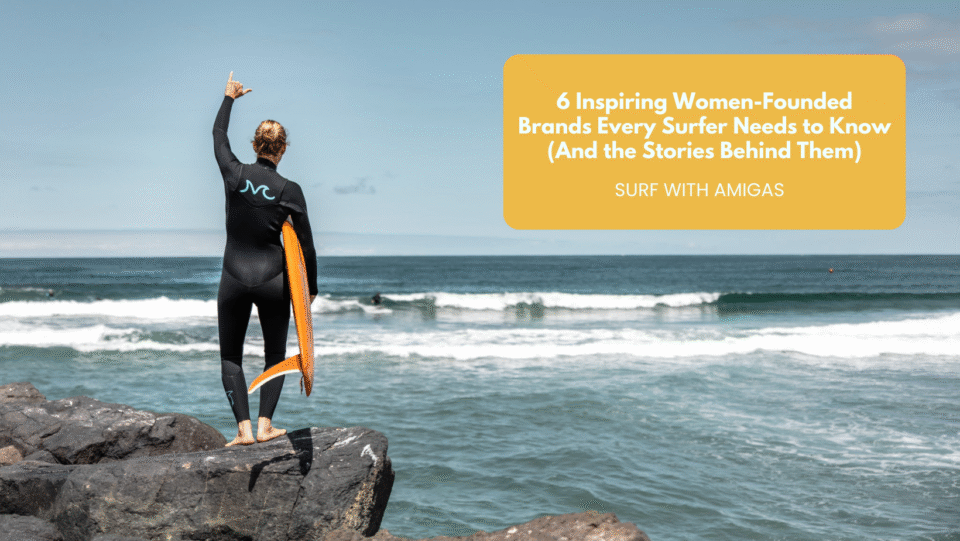
6 Inspiring Women-Founded Brands Every Surfer Needs to Know (And the Stories Behind Them)

At Surf With Amigas, we’ve always believed that surfing is more than just a sport—it’s a lifestyle, a sisterhood, and a way to connect with the ocean and ourselves. But even the most passionate surfers need the right gear, and that’s where our incredible partners come in. Each of our affiliate brands has a story and a commitment to empowering women in the water, and we’re proud to share their journeys with you!

Mamala: A Legacy of Strength and Connection We first met the founder of Mamala on one of our Surf With Amigas retreats—a passionate surfer whose brand was born from a desire to create durable, eco-friendly wetsuits made by women, for women.

Here are some words from the Mamala founder, Angela:

“I’ve always been a big believer in performance—and I was unsatisfied with the choices and quality of wetsuits I was buying—I decided to start a women’s wetsuit company focused entirely on performance and women. Named after and inspired by a fearless demigoddess—both shark and woman—who symbolizes both femininity and strength, Mamala has been on a never-ending quest to create high-performance wetsuits to enhance women’s cold water experience. Through collaborations with women surfers, support for women’s surf contests and initiatives that promote women’s participation in surfing, Mamala is committed to building a strong, supportive community for women in the lineup.” 

The brand is all about honoring the ocean and the women who ride it with courage and grace. Their major goal is growth—both as a women’s wetsuit company and as a leader in high-performance, sustainable wetsuits made specifically for women. They are here to set the standard and build a strong and supportive community for women surfers. Use the discount code SWA20 at checkout for 20% off your next order!

Carve: Born on the Waves, Built for Women Our introduction to Carve was a little different—a recommendation from an amiga who swore by their surfwear. Founded on the Australian coast, Carve began with a mission to create stylish, high-quality surf gear designed specifically for women. Built by surfers who saw a gap in the boardshorts market, Carve’s comfortable fits and bold designs quickly became a favorite for our instructors, offering both style and strength in the water. This is a small surf/lifestyle brand that designs classic, sophisticated styles for all different stages of life. Use the discount code SURFWITHAMIGAS10 at checkout for 10% off your next order!

Salt Gypsy: Where Sustainability Meets Style Salt Gypsy is the brainchild of Danielle Clayton, a former surf guide turned entrepreneur who saw the need for stylish, sustainable surfwear for women. Her journey began with a single pair of surf leggings that quickly turned into a global brand known for its eco-conscious fabrics and commitment to women in surfing. For us, Salt Gypsy is more than just gear—it’s a story of resilience, creativity, and riding waves with purpose. Use the discount code SURFWITHAMIGAS10 at checkout for 10% off your next order!

Dkoko: A Celebration of Femininity and Adventure Founded in Costa Rica, Dkoko was created by women surfers who wanted swimwear that could keep up with their adventurous lives. With a mission to celebrate femininity and freedom, Dkoko’s bikinis and one-pieces are designed for active women who want both style and security. Our instructors love Dkoko’s designs for their perfect balance of beauty and functionality. Use the discount code SURFWITHAMIGAS10 at checkout for 10% off your next order!

Sting Bling: Jewelry That Tells a Story Sting Bling is the creative passion of Cherise Richards, our amazing yoga instructor at our Costa Rica and Nicaragua locations. Cherise has been part of the Surf With Amigas team for many years, and her jewelry line is a reflection of her love for the ocean and mindfulness. Sting Bling pieces are handmade with love, each one a little reminder of the sea’s magic, whether you’re on a surfboard or on your yoga mat. Use the discount code SURFWITHAMIGAS10 at checkout for 10% off your next order!

Kaiola: Stylish Sun Protection for Every Wave Our connection with Kaiola began with a simple but essential idea—surf gear should make you feel free, not restricted. Founded by a team of passionate surfers who understand the unique needs of women in the water, Kaiola is all about creating high-performance surfwear that doesn’t sacrifice comfort or style. All of their pieces are designed to move with you, whether you’re paddling out, riding a wave, or stretching on the sand. Kaiola’s unique chin strap is our favorite part about their hats, be it bucket, visor, or baseball cap! The sleek design ensures that the hat doesn’t disrupt your surfing experience yet stays on, even in big, powerful surf. Our instructors love Kaiola’s designs, which offer a perfect blend of support, durability, and style. Use the discount code SURFWITHAMIGAS10 at checkout for 10% off your next order!

Surf brands for women


At Surf With Amigas, we don’t just partner with brands—we build relationships with like-minded women who share our love of the ocean and our commitment to empowering women in the water. Each of these brands has earned a place in our community because they represent more than just great products—they represent stories, values, and a passion for surf.
Whether you’re looking for eco-friendly surfwear, jewelry to bling out your surf sessions, or simply some inspiration, these brands have you covered. And when you choose them, you’re not just supporting a brand—you’re supporting a sisterhood.

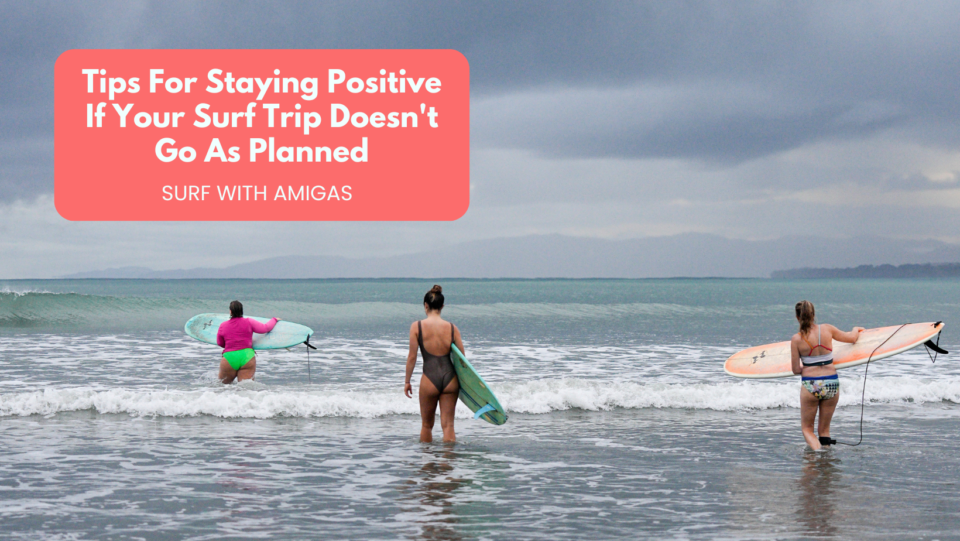
Tips For Staying Positive If Your Surf Trip Doesn’t Go As Planned

surf with amigas retreats staying positive

If you’re a surfer, then you know that surfing is one of the most exhilarating and freeing experiences you can have! The thrill of catching a wave, living in daily rhythm with the ocean, and the camaraderie with fellow surfers create moments of pure joy. But, after years in the water, or when faced with difficult conditions after months of planning a surf trip, it’s sometimes easy to lose sight of that initial stoke. In those moments, we can get caught up in frustration, competitiveness, or an almost mechanical drive to catch as many waves as possible. These feelings are normal and part of the surfing experience! But here we propose a few ways to handle those situations to keep surfing fun, especially when expectations don’t meet reality on a surf trip.

The Trap of Wave-Hunting

At some point in your surfing career, you might notice a shift in your approach to the sport. This may especially manifest when on a surf trip of a lifetime. The focus becomes less about the sheer fun of riding a wave and more about how many waves you can catch in a session. You may even start to prioritize quantity over quality, chasing down every opportunity with little regard for those around you. This mentality can lead to frustration—whether it’s from not catching waves, dealing with crowded lineups, or just the pressure you put on yourself to perform.

This shift in mentality is understandable. After all, we want to improve, and there’s nothing wrong with being ambitious. But when the sole focus is on you and your wave count or performance, something important gets lost. Surfing can becomes less of a joyous escape and more of a chore—a task to complete, a competition to win. In my experience, the more you focus solely on catching waves, the less you actually enjoy the act of surfing.

To avoid getting stuck in the wave-hunting trap, it’s crucial to reconnect with the original joy that drew you to surfing in the first place. Start by consciously shifting your mindset away from competition and towards appreciation for the sport. Remind yourself that surfing is about more than just the number of waves you catch. Take a moment to pause between waves and appreciate where you are, and find new ways to have fun in the lineup and reduce the pressure to perform (read on for more of this). When you do feel that pesky frustration or negative self-talk creep in, give yourself permission to get out of the water and reset.  


Dealing with Crowds and Bad Conditions

Sometimes, even on your best surfing days, frustration can still rear its head. Maybe the lineup is too crowded, and you feel like you can’t catch a break. Or you’ve planned an epic surf trip for months, only to be met with flat or stormy conditions. It’s easy to let these situations sour your experience, but there are ways to make the most of the cards we are dealt. Oftentimes, factors like weather or crowd are completely out of your control. In order to come to terms with frustration, acceptance of this fact is the first step.

Instead, focus on what you can control—your attitude and your approach. For example, if you’re surfing in a crowd, position yourself strategically (fill in holes in the lineup with less people), but don’t be overly aggressive. Find joy in the smaller moments, whether it’s a short ride, a well-executed turn, or even just sitting on your board and soaking in the scenery. Use the opportunity to work on different aspects of your surfing, like improving your paddling technique or practicing mindfulness in the water. Want more mindfulness tips for surfing? Check out these videos!

As for bad conditions or a skunked surf trip, remember that surfing isn’t just about the waves. Especially given just a week or two on a surf trip, try to accept that you won’t always have perfect conditions. Instead, try focusing on how it feels being in the ocean, connecting with nature, and enjoying the moment. If the waves aren’t great, take the opportunity to explore other aspects of the day/trip—whether it’s checking out a new spot, enjoying the local culture, interacting with the ocean in a new way (like fishing or snorkeling), or just spending time with friends. Even if the waves aren’t as you imagined, you very well could still be on a once in a lifetime trip!

Switch Up Your Board and have more Fun

This might seem like a no-brainer, but when your surfing starts to feel dull and mundane, sometimes all it takes is changing the board you’re riding to bring back the stoke. You can learn all about surfboards with Surf With Amigas Founder Holly Beck here. Hustling around on a potato chip shortboard in 2-foot, onshore slop isn’t likely to give you much satisfaction, no matter how skilled you are. Instead, consider grabbing a different board—something that suits the conditions and brings a fresh perspective to your session. Go for a fish, longboard, a soft top, a finless board, or even a surf mat or boogie board! Sometimes when we choose to ride a board completely different than what we’re used to, we can let go of expectations and put less pressure on ourselves, cultivating a more playful experience in the water. Also, new boards will challenge you in new ways and enhance your skillset.

The Joy of Sharing Waves

If you find yourself getting frustrated for any of the reasons listed above, or no longer feel excited about surfing, I encourage you again to try reconnecting with a sense of play. One of the most rewarding experiences in surfing is sharing waves with others. When you drop into a wave and see a friend next to you, hooting and laughing, it amplifies the stoke. It’s a reminder that surfing is, at its core, a communal activity. It’s about the joy of being in the ocean together, sharing the highs and lows, and celebrating each other’s successes.

Next time you’re in the lineup, make a conscious effort to share the waves. Call out to someone else if you see a set approaching, offer a wave to a surfer who hasn’t caught one in a while, and take pleasure in watching others ride. You’ll find that this attitude doesn’t diminish your experience—it enhances it.

Surfing is meant to be fun. It’s meant to be a source of joy, connection, and stoke. When you find yourself getting frustrated, whether due to crowds, conditions, or your own mindset, take a step back and remember why you started surfing in the first place. Shift your focus from wave count to quality of experience. Be kind, be generous, and share the stoke. In the end, you’ll find that the more you give, the more you may receive in return.

The Difference Between Epoxy and Polyurethane Surfboards

We occasionally receive a message from an Amiga asking to be able to ride a “fiberglass board” on their Surf With Amigas Retreat as opposed to an epoxy board. The question always makes us grimace.

Unless the board is made from some unusual material like carbon fiber, ALL surfboards are wrapped in fiberglass. I think what most surfers are actually wanting is to avoid riding a “pop-out” board – as in the mass-produced SurfTech or NSP variety. When choosing a surfboard the actual factor to consider is whether the board is made with polyurethane (PU) or epoxy (EPS) foam.

Let’s Start with the Basics: How are Surfboards Made?

In case you have no idea how surfboards are constructed, we’ll start with the basics. Of course there are always experimental surfboards out there, but the vast majority of boards are made of a foam core wrapped in layers of fiberglass and laminated with resin. 

In the diagram here you see a foam core which can be “EPS” or “PU” (more on that in a bit), covered in layers of different weight fiberglass (in this case 4oz on top, 6oz on bottom), then laminated with resin. You can see the wooden stringer down the center represented as blue lines.

The surfboard starts as a “blank” which is a chunk of foam already in the general size and shape of a finished surfboard. The foam core, or blank, is formed in a large, cement mold roughly the shape of the surfboard. The mold is constructed in two halves, and the inside is lined with a special paper that keeps the foam from sticking to the mold. The two halves are clamped together and the mold is heated. When the liquid polyurethane chemicals are poured into the mold, the heat triggers a chemical reaction which begins forming a dense, white foam. Surfboard builders call this process, “blowing the blank.” After 25 minutes, the mold is opened and the foam core is taken out and allowed to finish hardening. Once the core is hard, it is cut in half vertically from the nose to the tail. A thin stringer is glued between the two halves, and the core is then clamped back together to dry. Stringers provide stiffness, strength, and the right amount of spring when the board is compressed through turns.

This process creates a blank that looks like a rough surfboard. It’s thicker, longer, and rougher than the finished product, but already more or less in the final shape. Surfboard shapers choose a blank closest in size to the board they want to make as the density is not uniform throughout. There is generally a slightly more dense outer layer and a softer inner layer. The shaper will then just use a planer to cut the blank down to the desired thickness, rail shape, tail shape and add bottom contour.

Here’s a Surfboard Shaping History Lesson:

From 1961-2005, 90% of American-made and 60% of surfboards made worldwide began as polyurethane foam (PU) blanks blown by Clark Foam in southern California. In 2005, citing difficulties from environmental regulatory agencies, he abruptly shut down his factory which sent shockwaves through the industry.

Vintage Gordon “Grubby” Clark in his foam factory, along with a lineup of three iconic Clark Foam “blanks”.

The sudden closing and destruction of the Clark Foam factory was seen as a big “f*ck you” to the industry and led to mild panic in some circles. Such was the power of this man and his near complete domination of the surfboard industry. See the photo on the right of the destroyed blank molds.

After the initial panic subsided, most shapers began to view the closure of Clark Foam as a good thing for surfboard material innovation. It ended a period of monopolistic control and created a new, free, open market for blank builders to come in with new technology and ideas. It also encouraged shapers to put more energy into experimentation with the more environmentally-friendly expanded polystyrene blanks. There are some benefits to the newer technology. For one, the density is uniform throughout the blank.

These new blanks are laminated with epoxy resins. Epoxy emits 50-75% fewer VOCs (volatile organic compounds) than polyester resin. Also epoxy is lighter than polyester. Under most circumstances, resin makes up a large part of a completed board’s overall weight. Not only is epoxy resin lighter than polyester, but less is needed per coat. This ends up meaning a much lighter surfboard – a big plus for most surfers. The biggest bonus however is the durability and strength of epoxy boards, not to mention the benefits to the environment.

TWO TYPES OF EPOXY FOAM

1. EXPANDED Polystyrene (EPS, beaded foam)

Expanded, or beaded, foam (EPS) is a relatively inexpensive and incredibly lightweight surfboard core. Manufacturers produce sheets of EPS by feeding tiny polystyrene spheres into a machine, then introducing steam coupled with a tiny amount of pentane gas to expand the beads and mold them to one another. The end result is an open cell foam, meaning that is very water absorbent. To combat this issue, shapers who use EPS foam usually add extra layers of fiberglass and epoxy resin to prevent any dings from penetrating deep enough to reach the foam. Epoxy resin is the only resin that can be used with EPS boards. The extra layers of fiberglass and resin make the boards stiffer and more solid feeling. It leads to a less flexible feel than a “traditional” board. A beginner surfer would not be able to tell the difference, but an advanced surfer who is compressing her board into high speed turns will definitely notice.

“Pop-out” boards are made using EPS foam, because the beads can be formed into specific molds. Often times these blanks are used without stringers relying on just the strength of the blank and the thicker layers of fiberglass in the glassing. The entire board is made in a mold or with vacuum bagging technology. This leads to the boards being less refined. They will be cheaper and more durable which makes them excellent for beginners who are not ready to invest in a more expensive surfboard. They are perfectly fine to learn on.

Originally, very few hand shapers use this type of EPS foam, because it is difficult to work with and nearly impossible to fine-tune with shaping tools (the beads retain their spherical shapes so well that any sanding causes whole chunks of foam to fall off, leaving the edges jagged). But recently better EPS with smaller cells has been created so that it now works for hand shaped boards as well. When Holly was a pro surfer getting boards from Rusty Surfboards, almost all of her boards were made of EPS foam and looking at the boards even up close, it would be very difficult for anyone to tell the difference of EPS vs PU in the finished board.

These days EPS foam technology has improved and high performance EPS blanks are available. Professional surfers and recreational surfers alike will choose EPS boards because of their environmentally friendly characteristics. They are also a lot lighter which makes them ideal for smaller waves or smaller surfers carrying bigger boards.

Characteristics of boards with Expanded Polystyrene (EPS) epoxy foam:

  • more water absorbent foam
  • lightweight
  • extra layers of fiberglass + epoxy resin for ding prevention
  • potentially more solid feel because of extra fiberglass + resin (less flexible for advanced surfers)
Holly Beck, rusty surfboard
Holly with an EPS and Epoxy board by Rusty Surfboards

2. EXTRUDED (XTR, closed cell)

Extruded foam (XTR) is made using expensive machinery and computers. The machines melt polystyrene crystals down, using additives and a blowing agent to essentially deflate and combine all of the ingredients together. The result is a fluid that expands as it cools, forming solid blocks of XTR foam. The foam is closed cell, so it blocks out moisture – a good thing in case you get a ding.

The process of making XTR foam is time-consuming and costly. The price of the foam itself, coupled with the fact that most XTR epoxy boards are hand-shaped, does unfortunately lead to a more expensive finished board – but one with several benefits. Not only is the foam core moisture-wicking and stronger than other types of foam, it is also extremely resistant to dings and compression-caused dents. XTR foam also has a good flex pattern, so it’s responsive on the water.

The problem with closed cell foam is two-fold. First, as mentioned above, it is expensive. You will almost always pay more for an XTR board than one made from EPS. Second, there have been reports of bubbles and delamination in the decks of some closed cell boards, caused by gas build-up between the foam, fiberglass and resin layers. However, some companies have made huge developments in XTR-constructed boards, finding ways to allow the gases to escape without compromising the integrity of the surfboard.

Holly has an XTR board that she’s been riding hard for over 15 years that is still in very good condition, something virtually impossible with other types of construction.

Characteristics of boards with Extruded Polystyrene (XTR) foam:

  • more expensive
  • moisture wicking foam core (doesn’t absorb water even when dinged)
  • stronger foam core
  • good flex for advanced surfers
  • extremely resistant to dings and pressure dents

Riding my XTR board in really fun waves about 15 years ago. It still looks good and works just as well today.


OTHER TECHNOLOGIES:

TL2 by SurfTech

SurfTech makes a Techlite core (fused cell foam, virtually waterproof) technology they call the TL2 design. The Techlite core is further improved upon with the addition of an Acrylite skin, which is glassed onto the board using epoxy resin. The Acrylite skin and the epoxy coating work with the core material to create an incredibly strong, responsive surfboard. The extra strength means that no stringer is needed, so the board is more flexible and springy in the water as well.


Hayden Shapes

Hayden Shapes is a quality surfboard manufacturer, also experimenting with different materials and designs. The Hypto Krypto is an awesome design for surfers wanting to go down in length but still keep paddle power since it has a wider nose for more planing but a narrower turn for high performance turns.

The construction combines a stringer-less, high-density custom shaped EPS core, laminated with biaxial fiberglass, epoxy resin and a parabolic carbon fiber frame. The carbon fiber frame within the laminate is the key to the performance vitality. Designed to maximize speed and drive while minimizing twist, FutureFlex essentially stores and releases energy as the surfer transitions through a turn. The FutureFlex construction creates a fast, dynamic and highly responsive surfboard that’s been design engineered for performance surfing ranging from the intermediate to advanced level.

This is Holly riding a surfboard made by a company called Aviso that no longer exists. It’s a hollow-core (no blank at all) carbon fiber board. The construction is similar to the SCore in that it is hollow, but made fully of carbon fiber so they are all black. (Tricky to keep the wax on when surfing one in the tropics as they get really hot). 


In summary – Epoxy vs Polyurethane

As described above, epoxy is lighter, stronger, and more environmentally friendly. An old EPS blank can be broken down and recycled into a new blank. The epoxy resin is less toxic to the board builder and the environment.

So what are the benefits of a lighter board? A lighter board is easier to carry, easier to paddle, and will often feel faster when riding them along the face of the wave. These all lead to more fun and froth, which is what it is all about. They are also very durable and maintain their integrity a lot longer than PU boards.

But, the epoxy boards can be stiffer and lighter which makes them tend to feel more “buoyant” and ride on top of the water, rather than in the wave. Since they are much more buoyant than PU boards, it is possible to ride shorter boards which can also enhance performance as the board fits better in the curve of the wave. Even pros ride EPS boards in smaller to medium-sized waves.

However, this buoyant feeling can make some people not like them. Also “pop-out” boards are made from this technology which can give the materials a bad name since they are associated with the image of cheaply produced junk.

In smaller, weaker surf, or for a beginner, the lightness is a really good thing. You will get the best weight to strength ratio with EPS/Epoxy construction; hand-built, composite, molded or otherwise. You’ll be able to lift a large board and carry it more easily to the water. For a surfer that is doing fast turns, the lightness of an EPS core combined with the strength of epoxy resin, will make for a more responsive, lively board.

It’s important to note that in bigger surf or choppy conditions, experienced surfers may actually prefer a slightly heavier board. Some older surfers who’ve gotten used to their PU boards will tell you that the feel and flex of a PU board is a feeling that will stick with you. Epoxy boards can have a “corky” feeling to them that can take some getting used to. Also, chop and windy conditions can make a lighter board feel like it’s bouncing more rather than plowing through the chop. Bigger waves are nice on heavier boards, especially if it’s also windy. In that case a PU blank with Polyester resin may be better.

A middle ground option is using a PU blank with Epoxy resin. Polyester resin will eat away (think: more nasty chemicals) EPS foam, but you can use epoxy resin with PU blanks so that’s a good compromise if you’re looking for the flex and weight of a PU blank with the environmental friendliness and durability of Epoxy.

Our advice: Get the board that you have the most fun on and makes you the happiest, because in the end, it doesn’t matter what you ride, as long as you are stoked.

Any guesses which of these are EPS and which are PU? It’s impossible to tell at a distance.